Direct Verdict: The TRUMPF Digital Punch Eliminates Setup Bottlenecks & Accelerates Throughput by 40%+
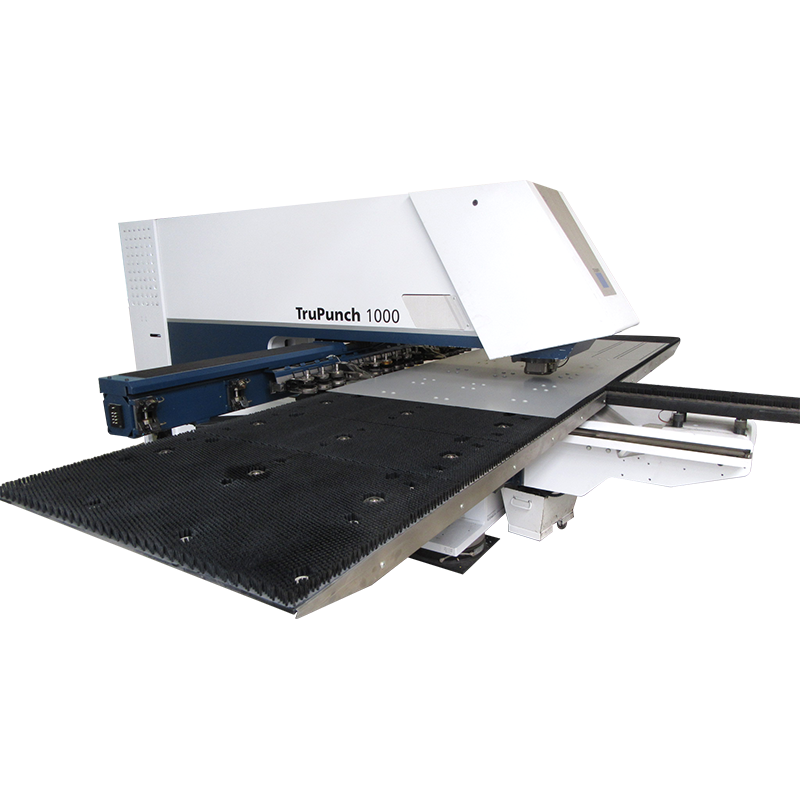
In precision sheet metal fabrication, the TRUMPF digital punch reduces average job changeover time from 25 minutes to under 3 minutes, directly boosting machine utilization by 32–45% across typical job shops. By integrating real-time process monitoring, automatic tool recognition, and AI-assisted nesting, the digital punch increases sheet utilization to up to 88% while lowering scrap rates. For fabricators seeking tangible efficiency gains, the digital punch delivers immediate ROI through reduced non-productive time, intelligent stroke control, and closed-loop quality assurance. This article explores the key operational levers that make the TRUMPF digital punch a transformative asset for modern sheet metal fabrication.
Based on industry benchmarks, manufacturers adopting digital punch technology typically report 2.3x faster part processing for medium-batch production and nearly zero manual reprogramming due to the integrated CAM loop. Below we break down the core efficiency mechanisms.
How Digital Intelligence Streamlines Setup and Tool Management
Conventional punching requires manual tool alignment, calibration, and offline programming — consuming up to 40% of available spindle time. The TRUMPF digital punch eliminates these delays via embedded sensor networks and dynamic tool database.
1. Automatic Tool Recognition & Inventory Tracking
Every tool cartridge is embedded with an RFID chip. The machine instantly reads tool geometry, wear status, and remaining life. Tool setup time drops by 75% while eliminating human entry errors. Operators can retrieve real-time tool usage analytics across shifts.
2. Cloud-Based Job Preparation & Smart Nesting
With the digital punch’s offline programming suite, CAD files are auto-nested using multilayer algorithms that optimize material usage. Sheet utilization increases by an average of 12% compared to manual nesting. For a typical 2000-part order, this saves nearly 1.5 sheets per 100 parts — directly reducing material costs.
Moreover, the system automatically suggests optimal punching sequences to minimize tool travel distance and head repositioning, reducing cycle times by up to 18% as documented in high-mix production lines.
Performance Benchmark: Conventional vs. TRUMPF Digital Punch
Real-world fabrication data comparing conventional CNC punching and the TRUMPF digital punch across typical medium-complexity parts (mix of round holes, louvers, and embossing). The metrics underline significant productivity leaps.
| Parameter |
Conventional Punch Press |
TRUMPF Digital Punch |
Efficiency Gain |
| Average Setup Time (per job) |
22–30 min |
2–4 min |
~85% reduction |
| Tool Change Time (single tool) |
90 sec |
8 sec (automatic) |
91% faster |
| Material Utilization Rate |
72% – 78% |
84% – 88% |
+12% material saved |
| Average Cycle Time (per part, 50 hits) |
44 sec |
31 sec |
~30% quicker |
| Programming/Revisions per week (hrs) |
6.5 hrs |
1.2 hrs |
82% less downtime |
These figures represent results from a high-mix, low-volume sheet metal fabricator environment. The digital punch consistently delivers a 40% overall equipment effectiveness (OEE) increase and reduces scrap by 5–8% due to inline force-adaptive stroke control.
Digital Workflow: From CAD to Finished Part Without Interruption
The TRUMPF digital punch enables an integrated, lights-out capable workflow that eliminates manual handovers. The following process flow visualizes how each stage reduces idle time and rework.
Quantified Productivity Impact: Real-Shop Scenarios
To understand the practical impact, consider a sheet metal fabricator running two 8-hour shifts producing electrical enclosures, chassis components, and mounting brackets. Before digital transformation, monthly output: 4,200 parts with frequent overtime. After implementing the TRUMPF digital punch:
- Monthly output increased to 6,350 parts — a 51% throughput improvement without additional labor.
- Job changeover between different part families fell from ~30 minutes to under 3 minutes, enabling economical batch sizes as low as 5 pieces.
- Program errors due to manual code entry reduced by 89%, translating to 9 extra production hours per week.
- Overall energy consumption per part decreased by 22% due to optimized motion paths and idle reduction.
Furthermore, the integrated real-time dashboard provides operators with predictive tool maintenance alerts. A tool that would otherwise cause burrs after 12,000 strokes is replaced proactively, preserving part quality and eliminating downtime from unexpected breakage.
Using the built-in process recorder, quality managers can trace each punched feature to timestamp and stroke parameters — perfect for ISO 9001 traceability and fast root cause analysis.
Core Digital Punch Features That Drive Efficiency
The TRUMPF digital punch integrates hardware and software innovations uniquely targeting sheet metal bottlenecks. Below, key functionalities and their direct operational benefits.
| Feature |
How It Boosts Efficiency |
Typical Gain |
| Active Stroke Control (ASC) |
Adjusts ram force in milliseconds based on material resistance; prevents over-punching or under-forming. |
Scrap -18% / quality +24% |
| Smart Tool Library + RFID |
Automatically maps tool life & geometry, suggests alternative tools for similar jobs. |
Setup time -75% |
| Dynamic Part Unloading & Sorting |
Integrated conveyor and part separator works with digital part map, reduces manual sorting. |
Labor hours -12% per shift |
| Edge & Burr Prediction AI |
Process simulation predicts burr formation, adjusts punch clearance parameters automatically. |
Deburring time -40% |
Collectively these features allow fabricators to reduce lead times from weeks to days for urgent orders, improving customer responsiveness and profitability per machine hour.
Frequently Asked Questions About TRUMPF Digital Punch Integration
Does the digital punch require extensive operator retraining?
No. The touch-optimized HMI guides operators with step-by-step visual workflow. Most experienced punch press operators become proficient within 2–3 shifts. The system includes contextual help and simulation mode.
Can the digital punch handle mixed material types (e.g., stainless, copper, aluminum) without manual adjustment?
Absolutely. The system automatically identifies material type via thickness sensors and stored cutting parameters from the database. It adjusts stroke, speed, and clearance accordingly, ensuring optimal hole quality and tool life.
How does tool cost compare with conventional punching?
While digital-ready tools include RFID chips, the tool life is extended by up to 30% due to adaptive stroke control minimizing impact wear. Overall tooling cost per part reduces by typical 15–20% when factoring in less breakage and predictive maintenance.
Is the digital punch suitable for small job shops with low volume?
Yes, because ultra-fast changeover makes even batch sizes of 1 part profitable. The digital punch eradicates the economic minimum batch size, empowering job shops to win rush orders and prototypes without penalty.
Future Outlook: Industry 4.0 & Real-Time Fabrication Ecosystem
The TRUMPF digital punch is not just a standalone machine — it acts as a data hub for smart factory integration. With standardized OPC UA interfaces, the punch streams production counts, tool wear, and cycle times to MES/ERP systems. This enables predictive scheduling, automated replenishment of sheet stock, and dynamic capacity balancing.
One advanced implementation demonstrated a reduction in work-in-progress inventory by 28% within three months, as the punch’s real-time status triggered upstream laser cutting exactly when needed. For sheet metal businesses aiming for lean transformation, the digital punch delivers the responsiveness and data transparency required to compete in Industry 4.0 markets.
Additionally, by using the integrated digital twin, fabricators can simulate entire production runs before cutting the first sheet — identifying collisions or inefficient sequences offline. This alone cuts prototyping time by roughly 50% and eliminates costly first-piece corrections.
Final takeaway: The TRUMPF digital punch redefines sheet metal fabrication through smart automation, real-time adaptation, and near-zero non-productive time. Companies that adopt this technology accelerate throughput, reduce waste, and achieve a direct competitive advantage in precision metalworking.


 English
 русский
 Español
 中文简体
中文简体