How Digital Punching Machines Reduce Operational Costs
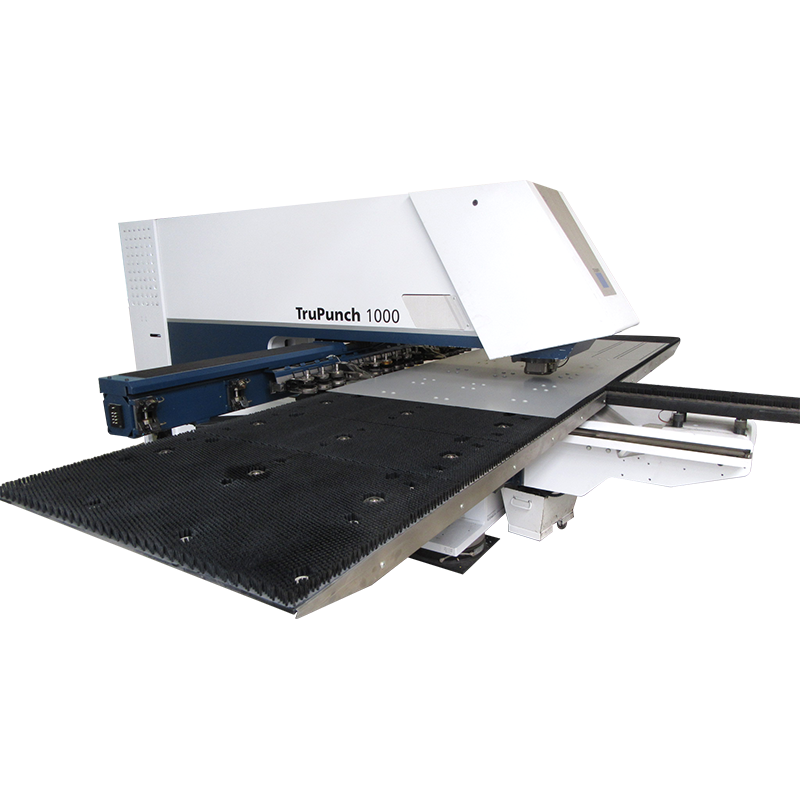
Digital punch presses (such as those from TRUMPF) cut operational costs in metalworking through three proven levers: energy savings of 30% or more via all-electric drives, tooling cost reductions up to 95% in certain geometries thanks to 360° rotating tool technology and multi‑tool stations, and labor & setup time cuts of 20+ minutes per job changeover through intelligent automation and material handling integration. These factors directly attack the biggest cost drivers in mechanical production: electricity, tool inventory, and manual intervention.
Energy Cost Reduction Through All‑Electric Drive Technology
Conventional hydraulic punch presses consume power continuously, even during idle dwells. Digital punch machines with all‑electric drive systems — like the Delta Drive architecture — reduce energy consumption by roughly 30% versus hydraulic equivalents. The savings come from:
- On‑demand power delivery – electricity is used only during the punching stroke, not for maintaining constant hydraulic pressure.
- Lower thermal load – less waste heat means reduced air‑conditioning and ventilation costs in the workshop.
- Regenerative braking – some electric drives recover energy during deceleration phases.
For a typical two‑shift metalworking operation, this translates into annual electricity cost reductions of 15–25% for the punching department alone — a direct boost to per‑part profitability.
Tooling Cost Optimization with 360° Rotating Technology
The monotool punching head principle — which enables full 360° rotation of every tool — fundamentally changes tooling economics. A single rotating tool replaces multiple fixed‑angle tools, drastically lowering the total number of tools required.
| Traditional Fixed‑Angle Approach |
Digital 360° Rotating Approach |
| Separate tools for each angular orientation |
One tool covers all angles for a given shape |
| Higher initial tooling investment |
Up to 76% fewer tools for complex part families |
| Manual tool changes between setups |
Automated rotation eliminates changeover time |
| Greater storage and maintenance overhead |
Reduced inventory, simplified tool management |
Beyond inventory reduction, the multi‑tool station (up to 30 tools per station) further decreases the need for frequent tool swaps, increasing spindle‑on time and lowering indirect labor costs.
Labor & Setup Time Reduction Through Intelligent Automation
Digital punch presses integrate material handling, part unloading, and tool management into a single workflow. Automated sheet loading and unloading reduces manual handling by over 70% on high‑mix jobs, while AI‑assisted setup recommendations eliminate guesswork.
- Job changeover times drop from an average of 25 minutes to under 5 minutes with automated tool positioning and pre‑set parameters.
- Nesting software optimizes material usage, reducing scrap by 8–15% per sheet — a direct material cost saving.
- Remote diagnostic & predictive maintenance cut unplanned downtime by up to 40%, keeping machines productive.
For a shop running 10+ job changes daily, these improvements quickly add up to over 200 hours of extra productive time per year — equivalent to adding a full week of output without extra headcount.
Operational Cost‑Saving Flow (Digital Punch Process)
All‑electric drive → 360° rotating tools → multi‑tool station → automated loading → less scrap / better nest → lower cost per part 30‑40% total savings
This integrated sequence shows how each feature reinforces the next, compounding cost reductions across energy, tooling, labor, and materials.
Additional Mechanical & Production Benefits
Lower Maintenance Expenditure
All‑electric drives have fewer wear components than hydraulic systems. Maintenance intervals are typically extended by 50%, and oil replacement costs are eliminated, resulting in lower annual service spending.
Improved Part Quality = Less Rework
Digital punching offers consistent stroke control and angle accuracy, reducing burr formation and dimensional deviations. Rework rates drop by 20–30% in many applications, saving both material and labor.
Scalable Production Without Adding Floor Space
Because digital punches combine multiple processes (punching, forming, tapping) in one machine, they reduce the need for separate secondary equipment — saving up to 30% of production floor footprint, which lowers facility overhead per part.
Frequently Asked Questions (FAQ)
Does the energy saving vary by material thickness?
Energy consumption is primarily stroke‑driven, so thicker materials increase stroke energy, but the all‑electric drive still delivers 25‑35% savings compared to hydraulic for the same thickness range. The relative advantage is consistent across mild steel, stainless, and aluminum.
How many tools can a single 360° station replace?
A single rotating tool can replace 4 to 8 fixed‑angle tools depending on the part geometry. In high‑mix production, this often reduces total tool inventory by 60‑70%, directly freeing up capital and storage space.
Is the initial investment higher for digital punch presses?
The capital cost is typically 15‑25% higher than a comparable hydraulic press. However, with energy, tool, and labor savings combined, the payback period is often under 24 months for shops with moderate to high production volumes — making the long‑term operational cost clearly lower.
Can digital punches handle thick plates (e.g., 10‑12 mm)?
Yes, modern digital punch machines are available in high‑tonnage variants that process up to 12 mm mild steel. The all‑electric drive delivers full torque even at low speeds, maintaining 30% energy savings compared to hydraulic models in the same tonnage class.
Practical Path to Lower Operational Costs
To realise these savings, metalworking shops should evaluate their current part mix, average setup frequency, and energy bills. The most impactful first step is often retrofitting or upgrading to a digital control platform that enables tool‑rotation and automated nesting, even before purchasing a new machine.
For new equipment purchases, prioritising all‑electric drives and multi‑tool stations delivers the fastest payback. Many operations report total cost‑per‑part reductions of 22‑35% after full digital punch integration — a competitive advantage that directly improves margins in today’s metalworking landscape.


 English
 русский
 Español
 中文简体
中文简体