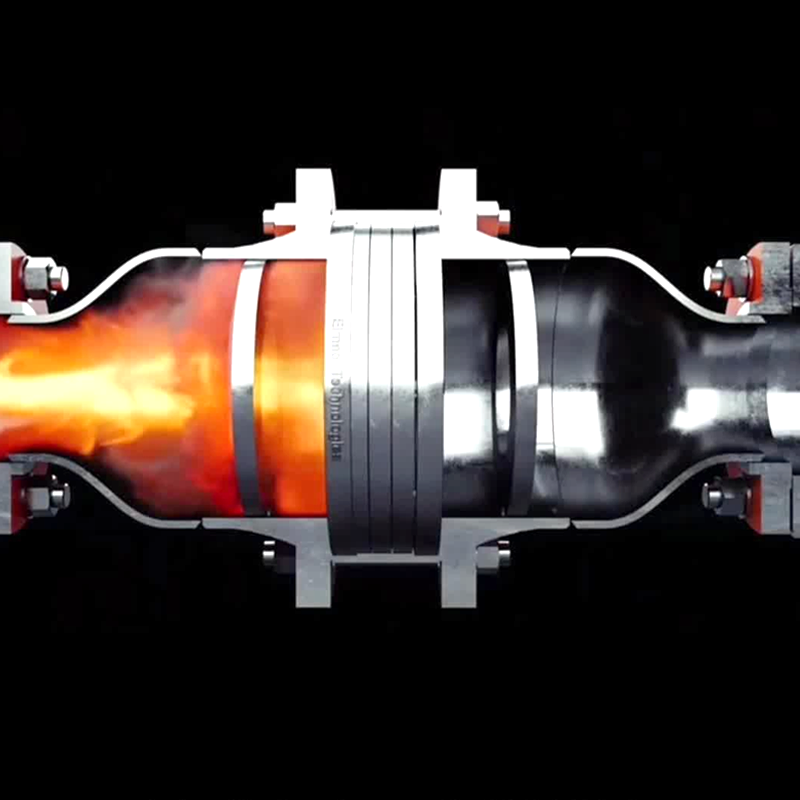
The Essential Guide to Flame Arrestor Plates: Engineering for Industrial Safety
In the complex landscape of industrial safety systems, few components are as critical and non-negotiable as the flame arrestor plate. Acting as a final barrier against catastrophic flame propagation, its performance hinges on precision engineering and rigorous manufacturing standards. As a mechanical sheet metal processing enterprise integrating design, production, sales, and service, Wuxi Runjiu Tian Machinery Co., Ltd. understands that crafting a reliable flame arrestor is an exercise in metallurgical knowledge, precision fabrication, and unwavering quality control. This guide delves into the technical intricacies of flame arrestor plates, explaining how advanced manufacturing transforms raw metal into a vital safety shield.
The Critical Function: How a Flame Arrestor Plate Works
A flame arrestor plate is a passive safety device designed to prevent the transmission of a flame through a pipe or duct. It contains a matrix of small, precisely formed channels or passages. When a flame front enters the arrestor, these channels absorb the heat energy from the flame, cooling it below the auto-ignition temperature of the gas mixture. This process, known as "flame quenching," effectively extinguishes the flame while still allowing gases to flow. Its reliability is paramount in systems handling flammable gases or vapors, such as those found in chemical processing, oil and gas operations, and industrial ventilation systems like oil mist purification equipment.
Design and Manufacturing: Where Precision Defines Safety
The efficacy of a flame arrestor is not a matter of chance but of calculated design and exacting production. Key parameters must be in perfect harmony to meet specific safety standards like ATEX or ISO 16852.
Core Design Parameters
| Parameter |
Description |
Impact on Performance |
| Maximum Experimental Safe Gap (MESG) |
A property of the gas mixture, defining the maximum gap that will prevent flame transmission. |
Directly dictates the required maximum channel width in the arrestor plate for that specific gas. |
| Channel Hydraulic Diameter |
The critical cross-sectional dimension of the quenching channels. |
Must be smaller than the MESG of the target gas to ensure quenching. Typically ranges from fractions of a millimeter to a few millimeters. |
| Plate Thickness & Free Volume |
The length of the channels and the percentage of open space in the plate. |
Determines heat absorption capacity and flow resistance. A balance is needed for effective quenching and acceptable pressure drop. |
| Material Selection |
Commonly stainless steel (304/316), aluminum, or specialty alloys. |
Chosen for high thermal conductivity, corrosion resistance, and structural integrity at elevated temperatures. |
The Role of Precision Sheet Metal Fabrication
Translating these design parameters into a functional device demands manufacturing capabilities of the highest order. This is where the integration of advanced technology and quality philosophy, as demonstrated by manufacturers like Wuxi Runjiu Tian Machinery, becomes essential.
- High-Precision Laser Cutting: This technology is ideal for creating the array of channels with extreme accuracy and consistency. It ensures clean, burr-free edges on every channel—a critical factor, as any imperfection can become a hot spot and compromise the quenching process.
- Material Consistency and Flatness: The base material must have uniform properties and be processed to a high degree of flatness. Warping or uneven surfaces can alter channel dimensions and create leak paths for flames.
- Quality Assurance: Every batch must undergo rigorous inspection. This includes dimensional verification of channels, pressure drop testing to validate flow characteristics, and, for critical applications, prototype flame quenching tests.
The possession of high-precision laser cutting machines, CNC punching machines, and a semi-automatic spraying line (for protective coatings on housings) provides the solid foundation required to meet these high-quality product requirements consistently.
FAQ
What is the difference between a deflagration and a detonation arrestor, and can the same plate be used for both?
This is a fundamental distinction in application. A deflagration arrestor is designed to stop a subsonic flame front (deflagration) that is propagating toward the device. A detonation arrestor is built to withstand the extreme overpressure and supersonic shock wave of a detonation that has already formed. They are not interchangeable. Detonation arrestors are significantly more robust, often involving multiple, thicker plates or special crimped metal elements. Selecting the wrong type can lead to catastrophic failure. The application's pipe length, gas mixture, and ignition point location determine which type is required.
How do I select the correct material (stainless steel vs. aluminum) for a flame arrestor plate?
Material selection is driven by the process environment and the gas properties. Stainless steel (Grade 304 or 316) is the most common choice due to its excellent all-around corrosion resistance, high strength, and good thermal conductivity. It is suitable for most chemical and hydrocarbon vapors. Aluminum is chosen for its superior thermal conductivity (enhancing heat dissipation) and lower cost, but only for applications involving non-corrosive gases and where it is expressly permitted (it must never be used with acetylene due to the risk of forming explosive acetylides). Always consult the gas compatibility charts and relevant safety standards.
What maintenance and inspection are required for in-line flame arrestors?
Flame arrestors are critical safety devices and require a formal maintenance schedule. Regular inspections should include:
- Visual Check: Look for signs of corrosion, fouling, or physical damage.
- Pressure Drop Monitoring: A significant increase in the differential pressure across the arrestor indicates blockage from particulates, polymers, or ice, which can impede flow and reduce quenching efficiency.
- Detailed Cleaning: Arrestors must be cleaned periodically according to the manufacturer's instructions—often with solvents, steam, or ultrasonic cleaners—to remove blockages. The element must be handled carefully to avoid damaging the precise quenching channels.
The plate should be replaced if cleaning cannot restore performance or if any damage to the channels is detected.
Can a flame arrestor plate be used as the sole safety device for a storage tank vent?
No, this is a common misconception with serious risks. A flame arrestor on a tank vent is a vital last line of defense but should be part of a layered protection system. The primary protection is maintaining an inert atmosphere (padding) or keeping the vapor concentration outside the flammable range. Arrestors can become blocked over time. Best practice is to use a pressure/vacuum vent valve with an integrated, certified flame arrestor element. This combination provides normal breathing function for the tank while incorporating the safety feature. Relying solely on an arrestor without other controls is not considered adequate protection by modern safety standards.
How does the manufacturing precision of the quenching channels affect the arrestor's certification?
Certification bodies (e.g., for ATEX, UL, or FM approvals) do not just certify a design; they certify a product from a specific manufacturing source. The certification process validates that the manufacturer's entire process—from material sourcing and design calculations to the specific machining methods and quality control checks—produces a consistent and reliable product. A manufacturer using high-precision laser cutting can demonstrate tighter tolerances and higher consistency than one using conventional drilling. This proven capability for reproducibility is a key factor in obtaining and maintaining certification, as it assures that every unit leaving the factory performs identically to the prototype that passed the rigorous official flame tests.

 English
 русский
 Español
 中文简体
中文简体